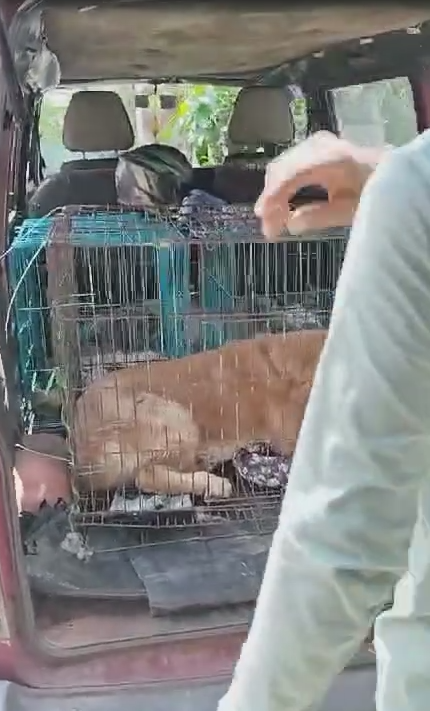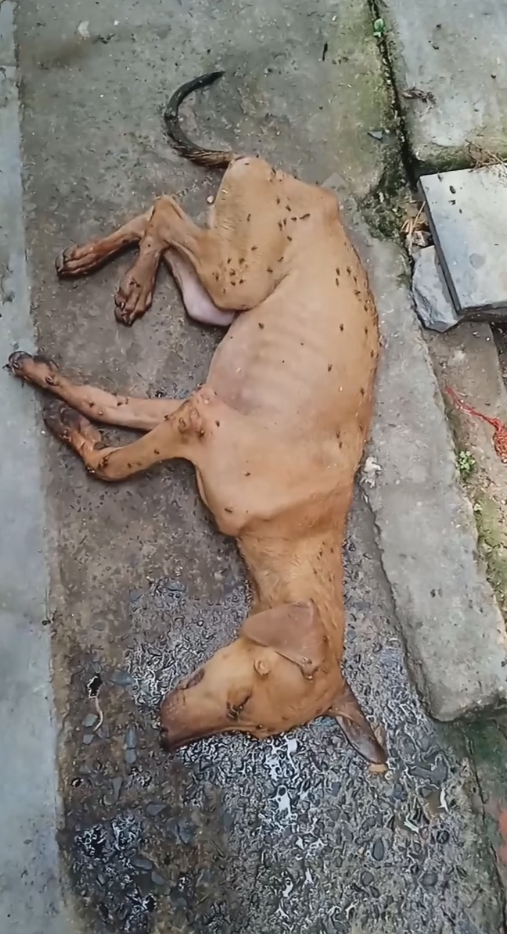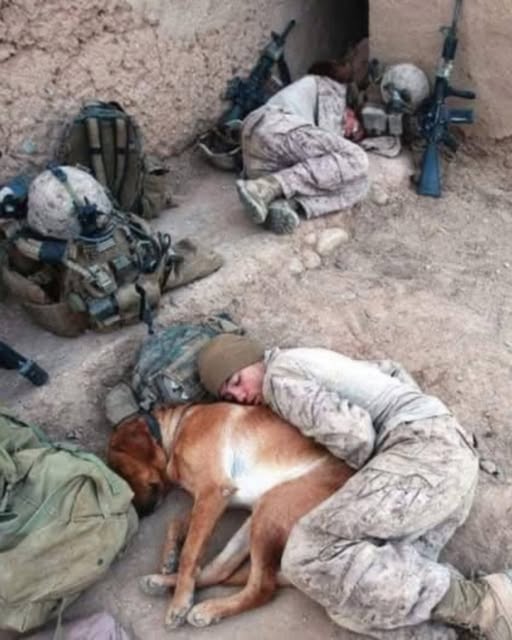
Amid the chaos of war, when the nights were loud with explosions and the days blurred into endless marches, a weary soldier stumbled upon a stray dog. The animal was thin, ribs showing through its dirty fur, with scars hinting at its own battles for survival. Instead of turning away, the soldier crouched, offering a piece of bread from his rations. The dog hesitated, then edged closer, its eyes filled with both fear and desperate hope. From that moment, the soldier named him Lucky, believing fate had brought them together in the darkest of places. Lucky did not know how to carry weapons, detect threats, or obey military commands, but he gave something far greater—companionship. The soldier began to find comfort in Lucky’s silent loyalty, feeling less alone in a world where trust was rare. While bullets and fire surrounded them, the dog remained by his side, refusing to leave.
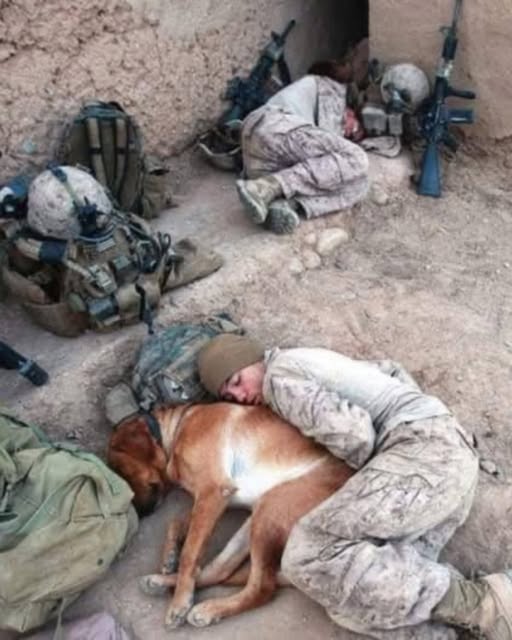
In the trenches, soldiers quickly noticed Lucky’s presence and welcomed him as part of the unit. He slept near their boots, warming them in the freezing nights, and lifted spirits with small acts of affection. When letters from home arrived late or battles dragged on longer than expected, Lucky’s wagging tail reminded them that there was still softness left in the world. To men who faced death daily, the dog symbolized resilience and survival. He became a reminder that even in war, kindness had a place. For the weary soldier, Lucky was more than a distraction—he was a lifeline. He found himself talking to the dog at night, whispering fears and memories he could not share with anyone else. Lucky listened in silence, his steady breathing calming the man in ways no words could.
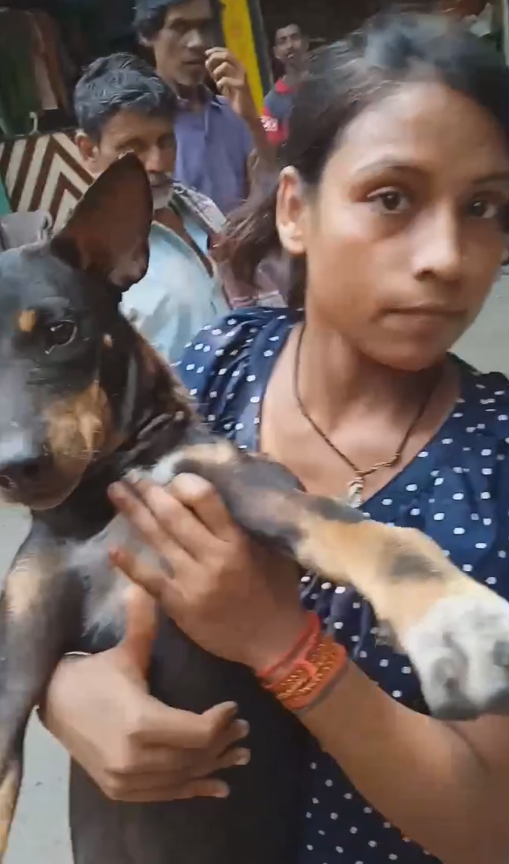
As weeks turned to months, the bond between them grew unbreakable. Soldiers in the unit began to joke that Lucky was the bravest among them, because he had no armor yet still stayed in the line of fire. Though not a trained war dog, he sensed when danger was near, often growling softly before ambushes or air raids. The men took this as a sign, trusting the instincts of their unlikely guardian. Lucky’s presence gave them courage in moments of despair, reminding them that not all hope was lost. For the soldier who had named him, the dog was proof that survival was not only about strength but about finding something worth protecting. Lucky, in turn, seemed to understand that he had finally found a home, even if it was in the middle of chaos. His loyalty did not waver, no matter how difficult the march or how loud the gunfire.

When the war eventually ended, many soldiers carried scars—some visible, others hidden deep within. The weary soldier carried both, but he also carried Lucky, refusing to leave him behind. Returning home, he introduced the scarred stray to his family, who quickly embraced the animal as one of their own. Lucky adjusted to civilian life, trading the sound of bombs for the sound of children’s laughter. Yet he remained the same loyal companion, sleeping by the soldier’s side, guarding him through nightmares that came long after the battlefield. People often asked why he cared so much for a dog that seemed ordinary, but the soldier always answered the same: “He saved me when I thought I had nothing left.” Lucky had not fought, but he had healed. And in the end, that was the greatest service of all.