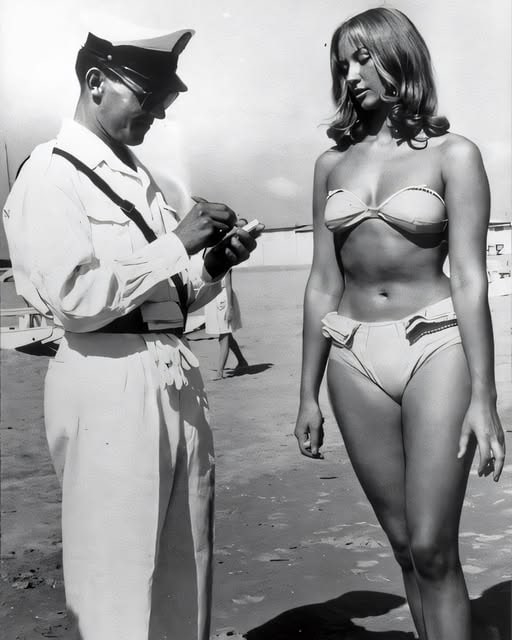
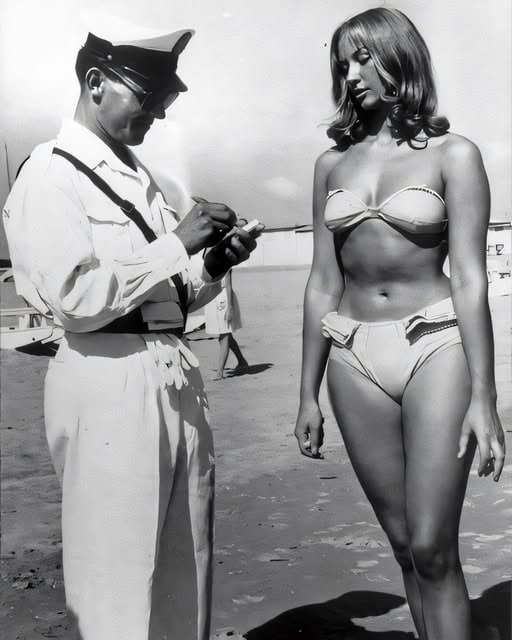
In the summer of 1957, an unusual case drew attention along the European coastline. A young woman enjoying the beach was suddenly approached by local police officers. The reason shocked many: she was fined for the simple act of wearing a bikini. At that time, the two-piece swimsuit was still considered scandalous in certain communities. Authorities argued that her outfit was “indecent” and disturbed public order. Tourists watched in disbelief as the officer wrote her a ticket. The event quickly became the talk of the town.

Back in the 1950s, bikinis were still a symbol of rebellion and controversy. Designed in 1946, the swimsuit had yet to gain wide social acceptance. In conservative regions, women who wore it risked being fined or even removed from beaches. The case of this woman illustrated the clash between tradition and modernity. For her, it was simply a matter of comfort and freedom. For the authorities, it represented an affront to public morals. The incident highlighted a changing world where fashion challenged social rules.

Newspapers of the era reported the story with mixed tones, some mocking the authorities while others defended the fine. Young people were quick to side with the woman, seeing her as a symbol of progress. Older generations, however, viewed the bikini as a dangerous trend that encouraged “decadence.” This cultural tension reflected broader transformations in post-war society. Fashion was not just about clothes, but about identity, freedom, and social change. The bikini was at the center of that storm.

Today, looking back, the 1957 case feels almost unbelievable. What was once considered a punishable offense is now a common sight on beaches worldwide. The woman’s ticket became an ironic symbol of how quickly social standards evolve. Her act of simply wearing a bikini contributed to a wider debate about women’s rights. Decades later, bikinis would be embraced in mainstream culture and celebrated in film, advertising, and sports. That old fine remains a curious reminder of how much times have changed.